
THE HERITAGE
A LIVING TRADITION SHAPED BY THE SEA, SKILL AND GENERATIONS OF KNOWLEDGE
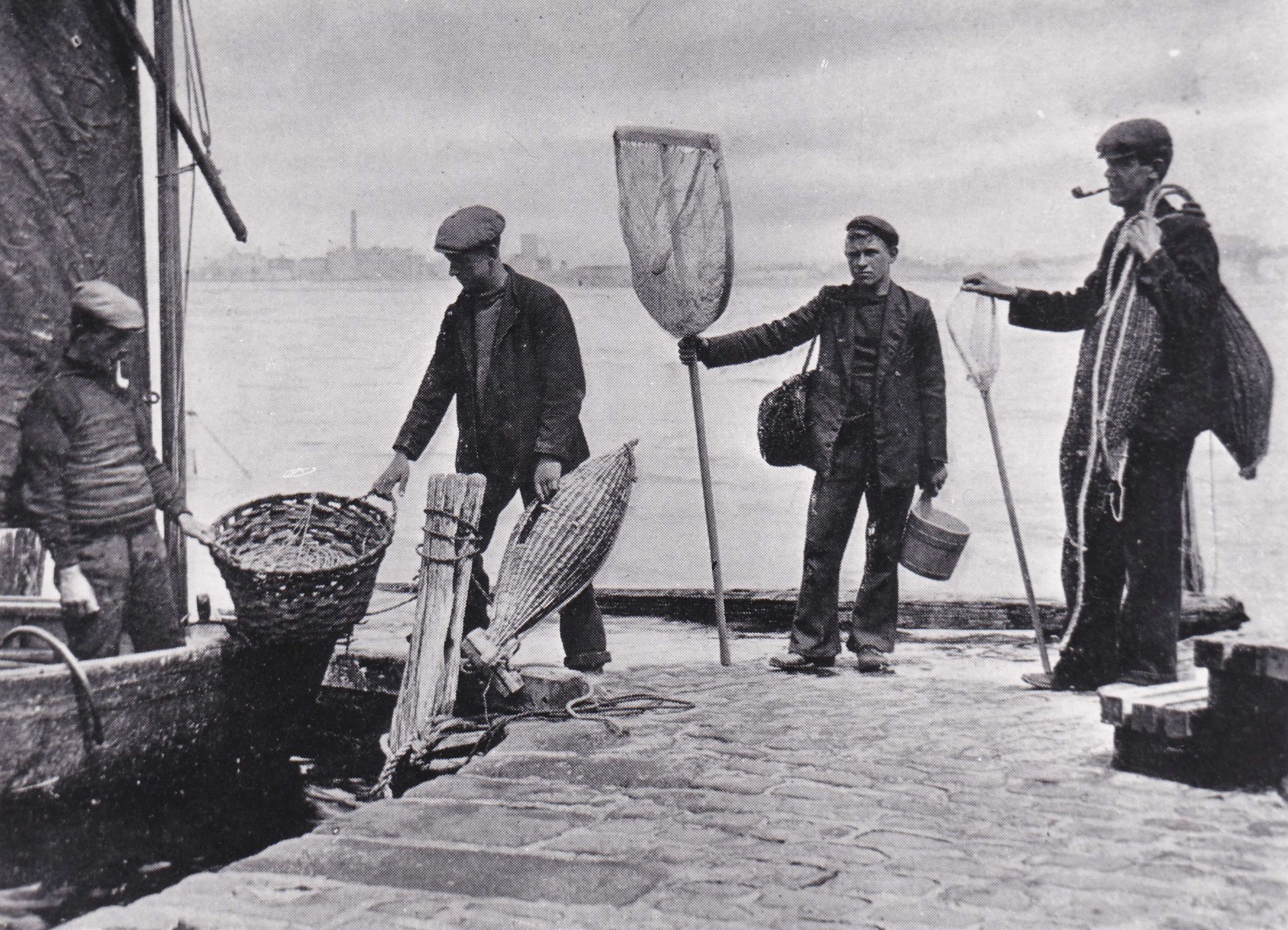
Guernsey fishermen with fishing baskets. Photo: Le Tricoteur, Guernsey.
MATERIALS AND MAKING
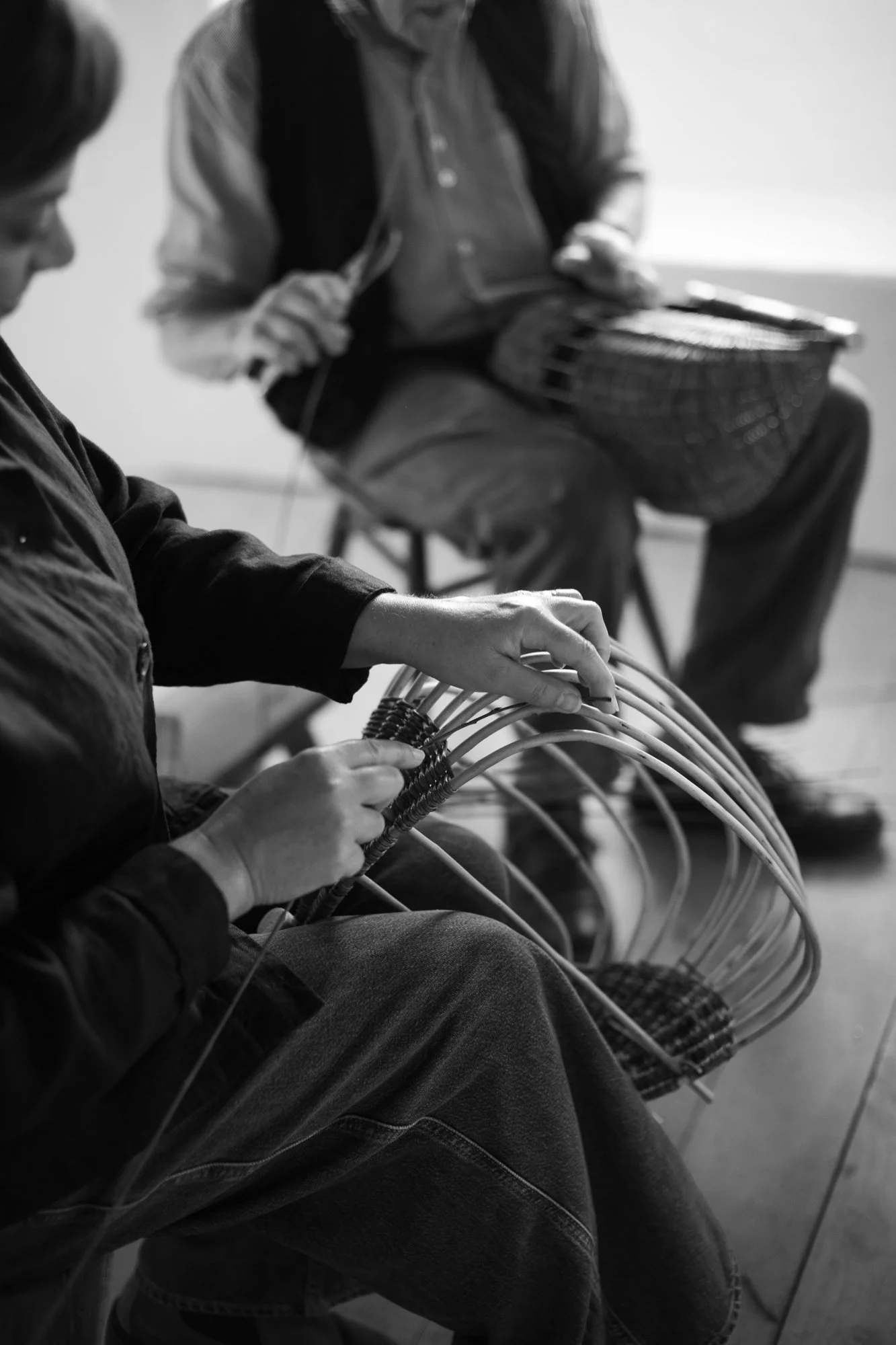
The making process involves several stages. It is slow, considered and engaging.
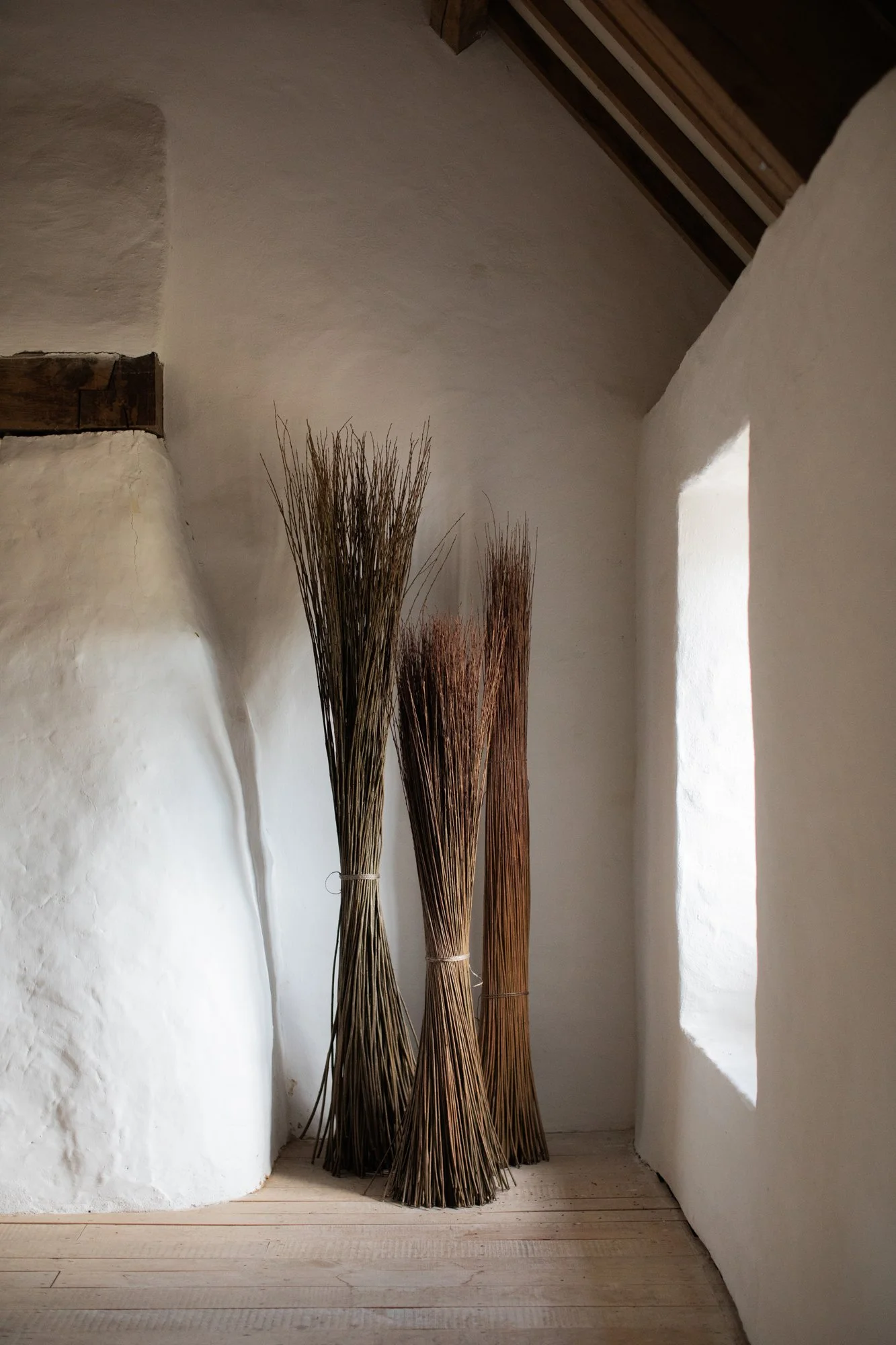
My willow is grown on the Somerset levels, where it has been farmed for generations by the Musgrove family. The willow arrives cut, dried and sorted into bundles by length. Sometimes I order freshly cut ‘green’ willow, so that I can sun-dry it to affect the colours.
Before weaving begins, the dry willow requires soaking and mellowing to transform it from brittle sticks into bendy, supple weavers. Soaking can take from a few days to a few weeks depending on the variety of willow and its size. Similarly, mellowing times vary too, but typically 2-3 days allows time to rest the rods for the water content to even out throughout the willow before weaving.
These processes are strongly affected by the weather; heat really will speed up the process and cold weather has the opposite effect. The weaving process is determined by the shape of the basket. Ponier a cous and courges are frame baskets, so making the frame is the first step. Vraic panniers and tomato baskets are made using a stake and strand method, which starts with making the base, then inserting stakes to create the sides of the basket. There are many techniques and patterns involved in weaving the baskets to sculpt them into their individual shapes and sizes.
Spliced rope is a functional finishing detail seen on both ponier à cous and courges. Ponier à cous were worn over the shoulder with a rope shoulder strap, while courges were tied to the boat and hung overboard. This maritime rope craft has a beautiful synergy with these island fishing baskets.
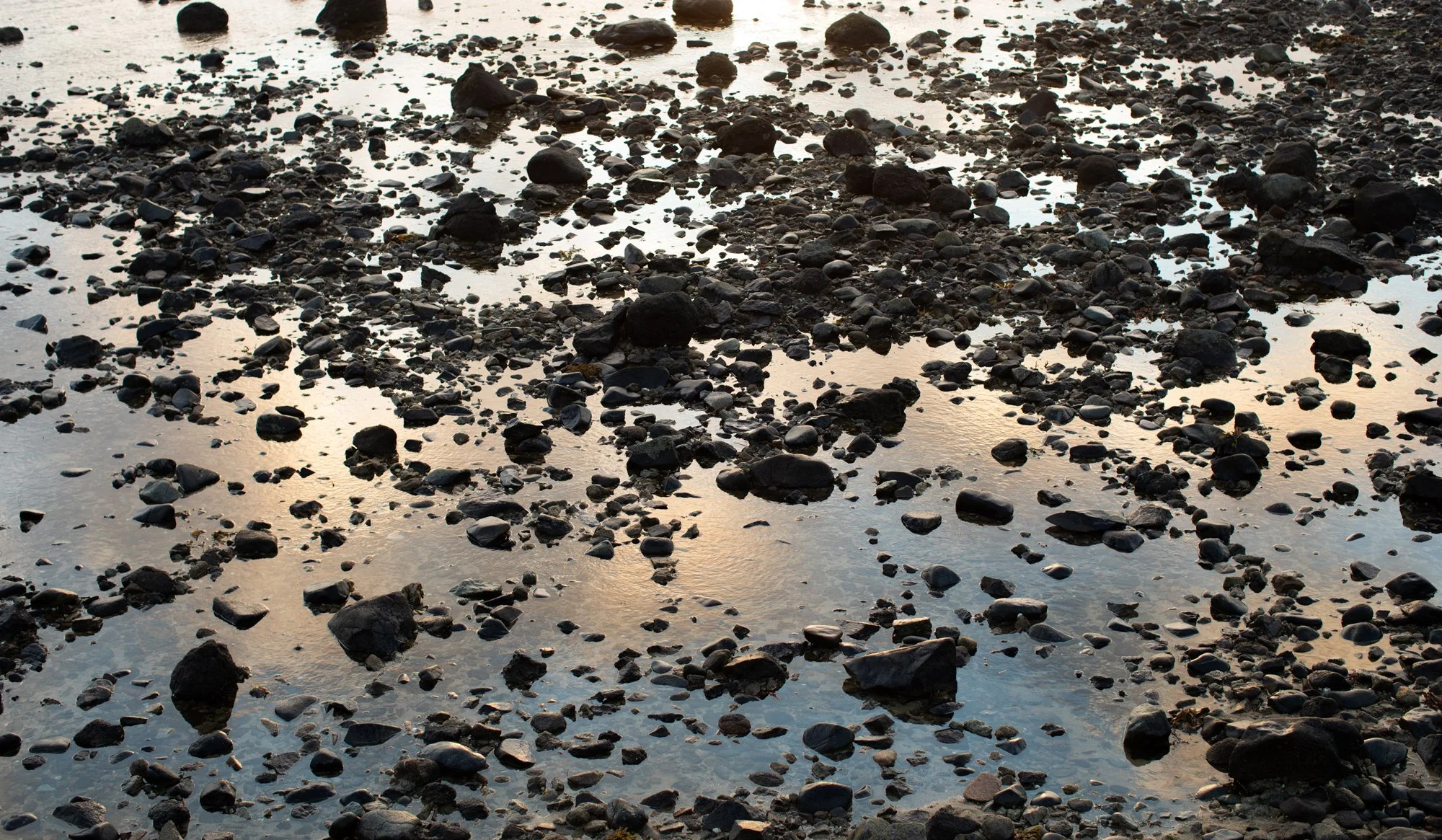
THE GUERNSEY PONIER À COU WAS TRADITIONALLY USED FOR FISHING OR FORAGING FOR ORMERS AT LOW TIDE. ORMERS, A LOCAL SHELLFISH DELICACY, MAY ONLY BE GATHERED FROM JANUARY TO APRIL, AT THE FULL OR NEW MOON, AND THE FOLLOWING TWO DAYS.
PONIER À COU
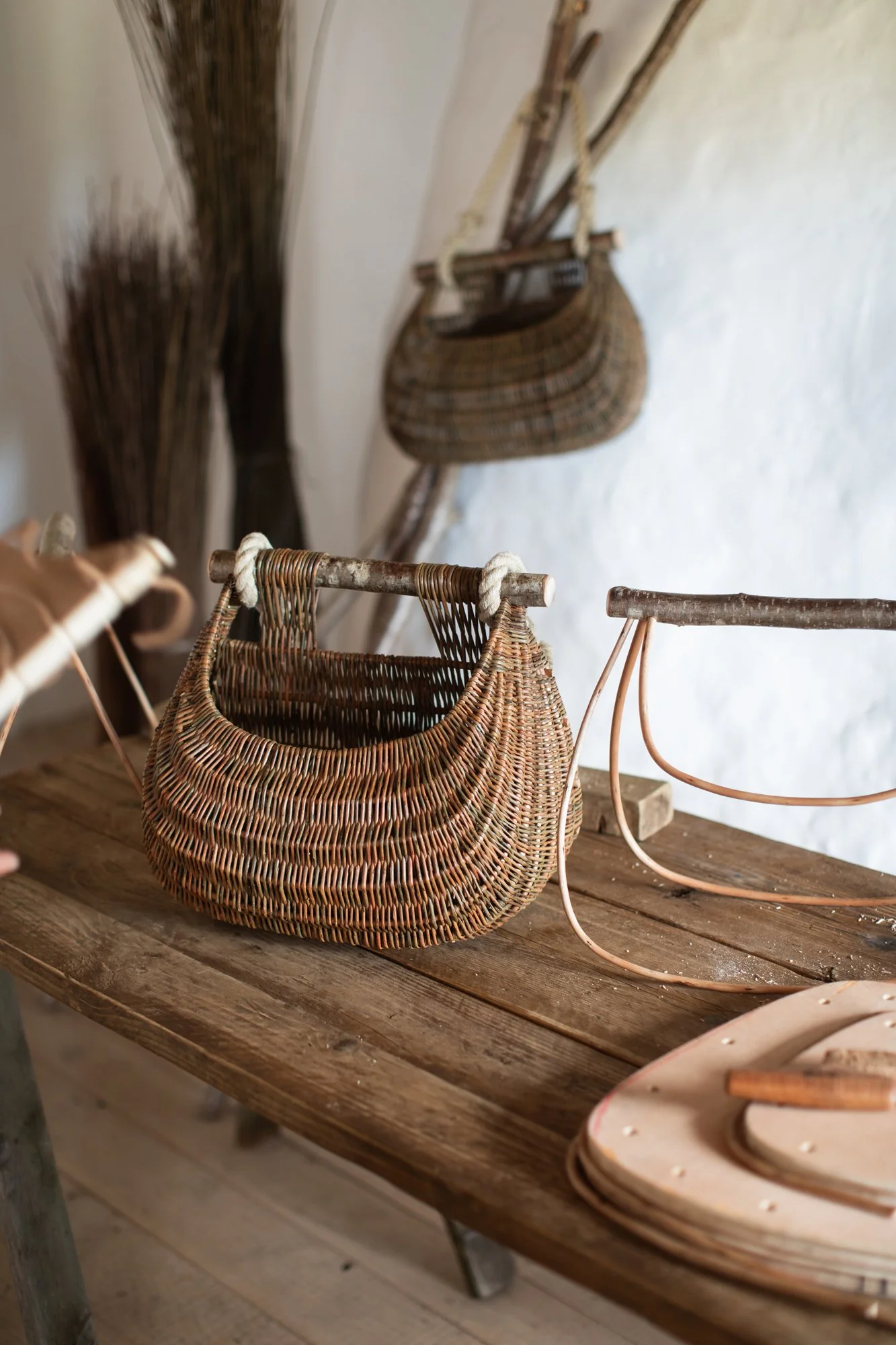
Ponier à Cou Guernsey fishing baskets have been crafted for generations, for centuries probably. Perhaps the most iconic of these is the Ponier à Cou, a basket with a unique and distinctive form - a frame basket with a wooden handle, a rounded front shape and a flat back.
Traditionally, ponier à cou makers were fishermen, and every basket bore the handwriting of its maker. Each was individual with slight variations in the overall form, some a little more rounded, some a little more angular. There are many nuances found in this heritage basket, but all share its distinguishable features of a curved front shape ribs, a wrapped wooden handle, horizontal ribs across the back, and a rope strap making it comfortable to wear slung over the shoulder.
Guernsey basket making is a tradition that's been passed on through generations by makers watching the last generation, having a go and continuing it. It has been passed on through family and the local community. I started by watching Dad making years ago and then having a go myself about twenty-five years ago. Dad learned from his great uncle Wilfred, who he used to fish with and who helped him with making his boat.
A lot of my initial learning was through watching dad, following the process of making each basket, and then having a go. This is followed by practice. Working with willow repeatedly, you learn how the willow feels and how to flex or twist it to get it to ‘perform’ at its best.
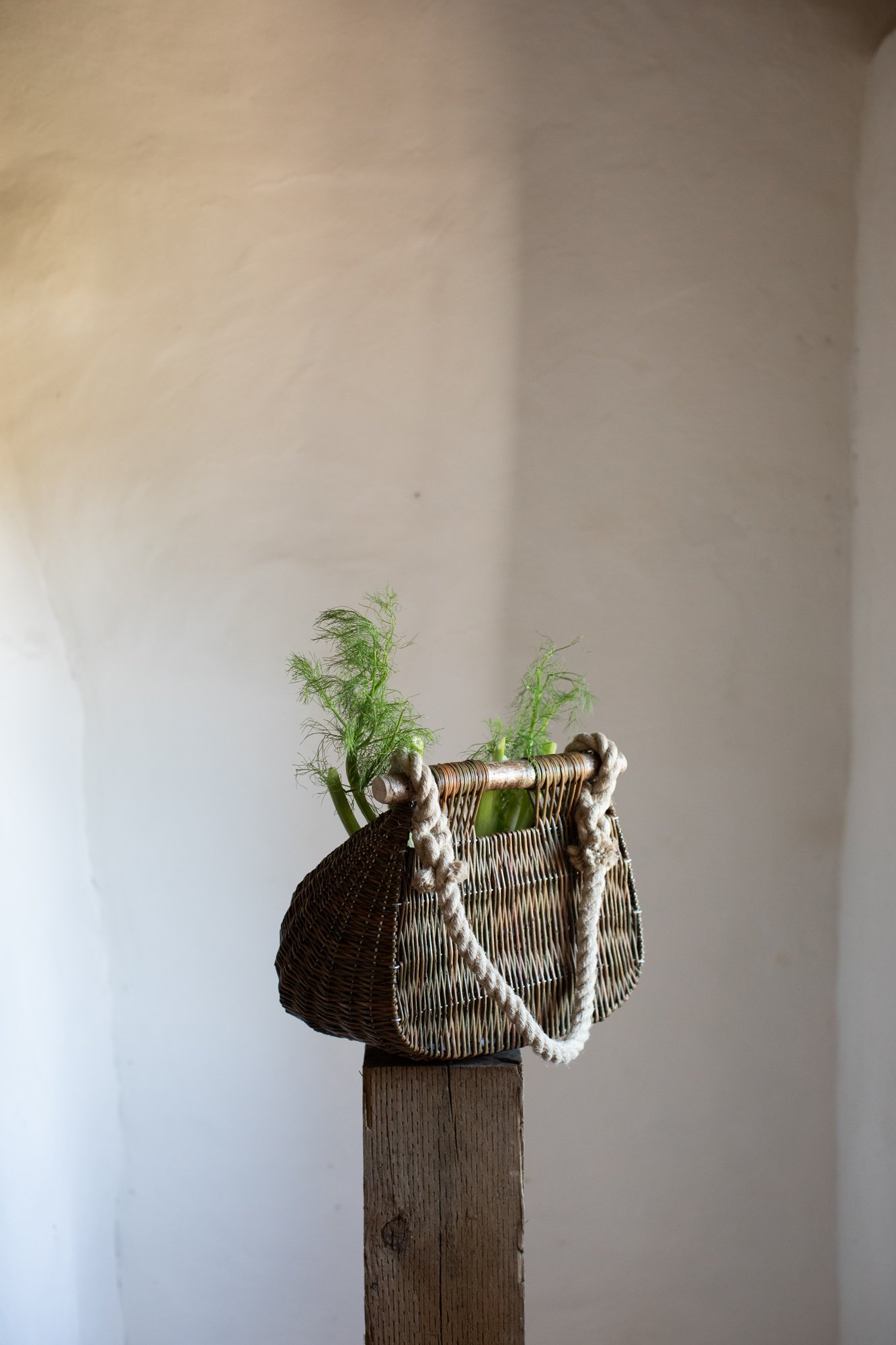
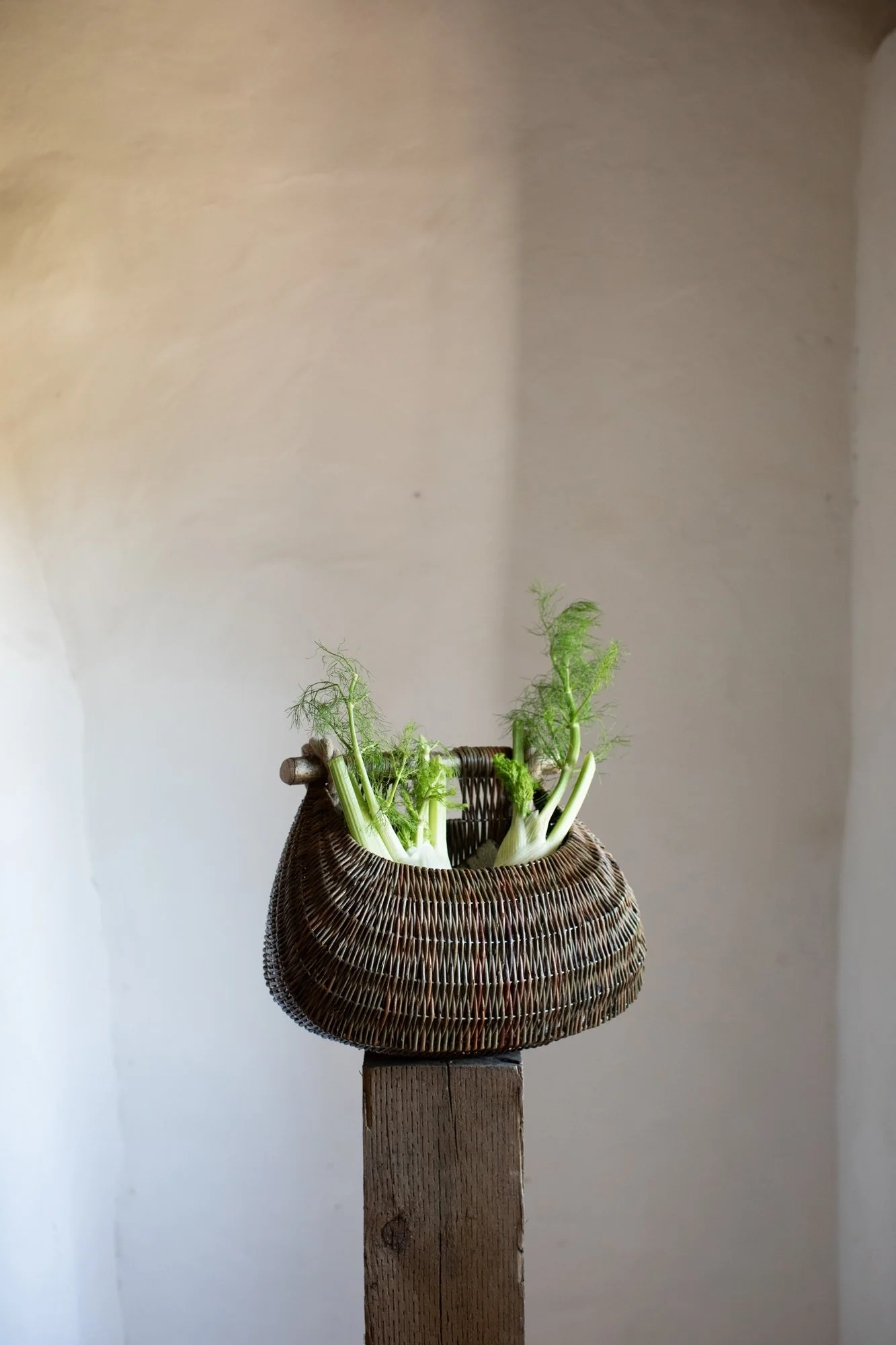
THESE BASKETS, ONCE MADE FOR FUNCTION, ARE NOW CELEBRATED FOR THEIR SCULPTURAL BEAUTY
VIAËR PONIER À COU
Viaër Ponier à Cou My family - my dad, great grandfather and great uncle - all made ponier à cous with wire frames. Generations before this, makers would have worked with willow weavers on willow ribs.
Over time, materials were tweaked to meet the functional needs of a fishing basket. My research has turned up many iterations of the ponier à cou, including variations on size, shape and number of ribs, plus 19th century baskets made with willow ribs. One basket in the National Trust of Guernsey’s collection has wire doubled up on the main willow ribs - perhaps demonstrating the transition from one tradition to the next.
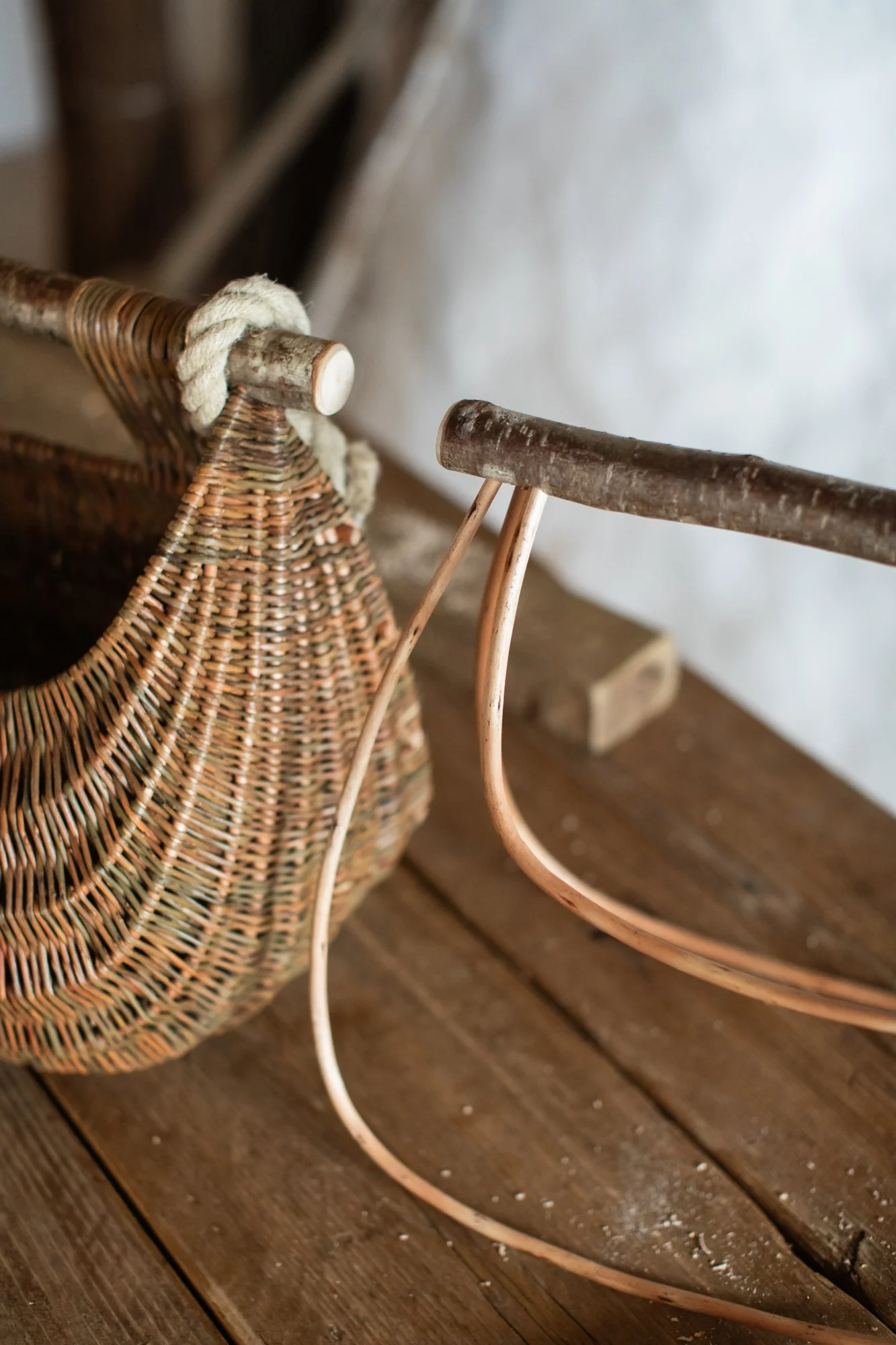
The 19th century willow frame ponier à cou takes longer to prep and make. The willow ribs are soaked and dried while they set bend around curved formas or jigs, to control their shape. To differentiate this baskets from the wire frame version, I have named this version the viaër ponier à cou, viaër is guernsey patois for ‘old’.
COURGE
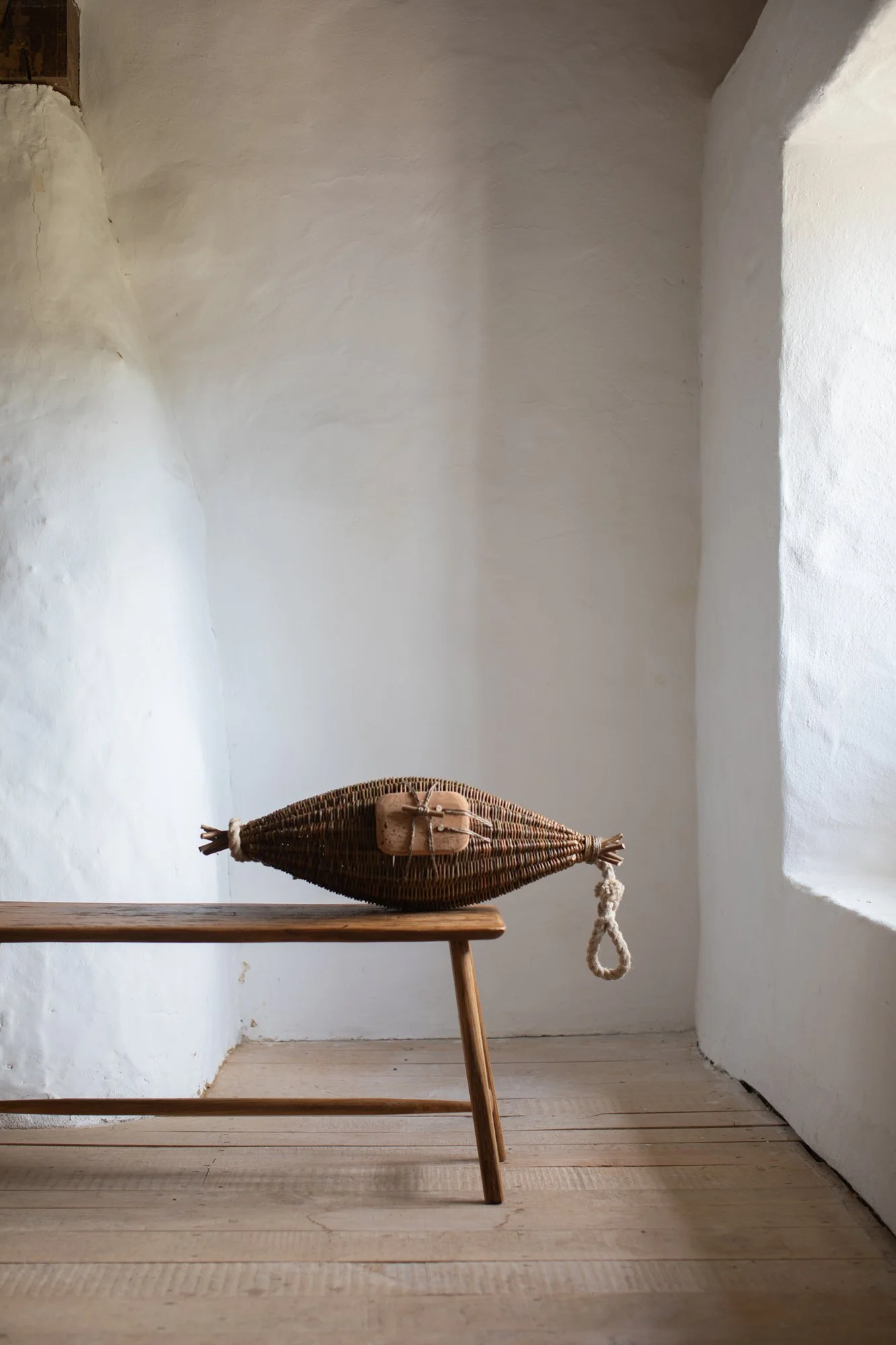
Other traditional fishing baskets include the Courge and Guernsey crab and lobster pots. Each basket had a different role and purpose. A Courge is a traditional Guernsey fishing basket that was used for holding sandeels (as live bait). My family pronounce this Guernsey patois word with a silent 'r', like the French ‘rouge’), others say courge (as in courgette).
The courge would be tied over the stern of the boat for the seawater to run through and keep the sandeels fresh for longer. The courge is made with willow ribs bunched together at each end and completed with a cork trap over the hole.
CRAB AND LOBSTER POTS
Willow pots are used to trap crabs, lobsters and crayfish on the sea bed. Plastic and metal alternatives have now taken over the use of willow pots in local commercial fishing and the making of Guernsey willow crab pots is now on the Heritage Craft’s Red List of endangered heritage crafts.
Guernsey crab pots differ from similar UK withy pots as they have evolved to meet the particular demands of local waters and dramatic tides. Each pot requires at least four rows of twist down the sides, adding strength and resilience to the pot.
Claire’s dad, Max Gaudion, recalls the days when fishermen made willow pots and sourced their willow from local supplier Tommy Hendry, who ran a small chandlery at The Hermitage, L’Ancresse. He shipped in a lorry load of willow each season, from Derham brothers in Somerset, UK. Some locals grew a small withy bed on the island and others relied on adding wild tamarisk to the pots bases when willow was less readily available.
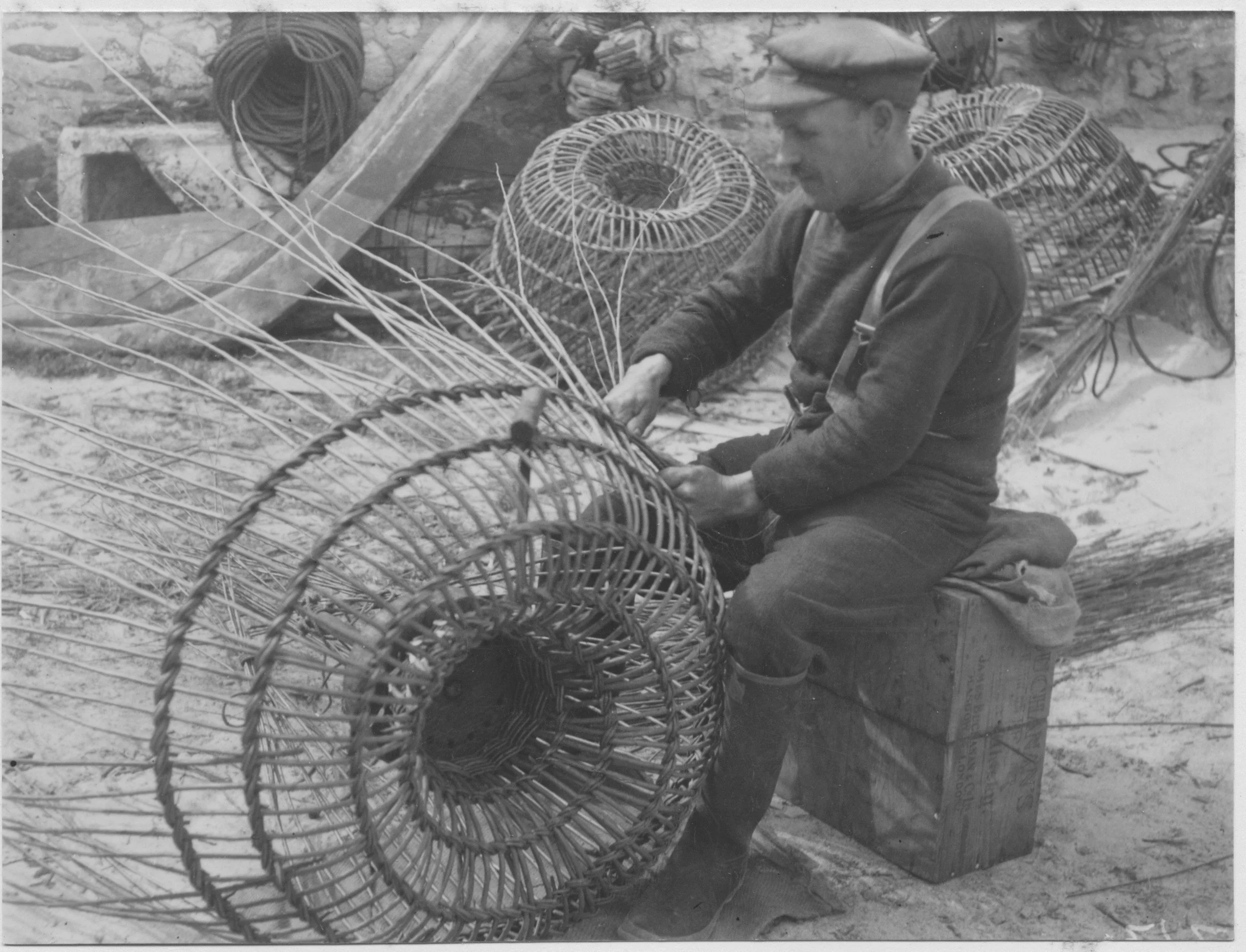
Edmund de la Mare making a Guernsey crab pot. Photo: Priaulx Library Guernsey
GUERNSEY BASKETS TODAY
Today, there is a growing intrigue and fascination in heritage crafts and living traditions. Perhaps in response to the fast, tech world we now inhabit there is a pressing need hold on to endangered knowledge from our ancestors. Dad used to often talk about how this craft is a rare thing nowadays, and that ‘it will be gone one day’. This has certainly motivated me.
As well as treasuring our intangible cultural heritage, slow craft responds to a deep human need to feel grounded, connected to natural materials and to our multi-sensory, tactile world. Intrigued by the craft process, drawn in by the scent of the willow material and making with my hands, I started picking up the willow sticks and mimicking Dad’s process weaving baskets. This was almost three decades ago.
Slow making brings me immense joy. Its rhythm and repetition. As Dad says, ‘you get lost in it’. There is also the heartening sense that I am continuing and preserving a generations-old tradition of heritage craft. Handcrafted objects hold onto these stories of the maker and the process of making. They harbour knowledge of our living traditions and resonate with us through their material and texture.
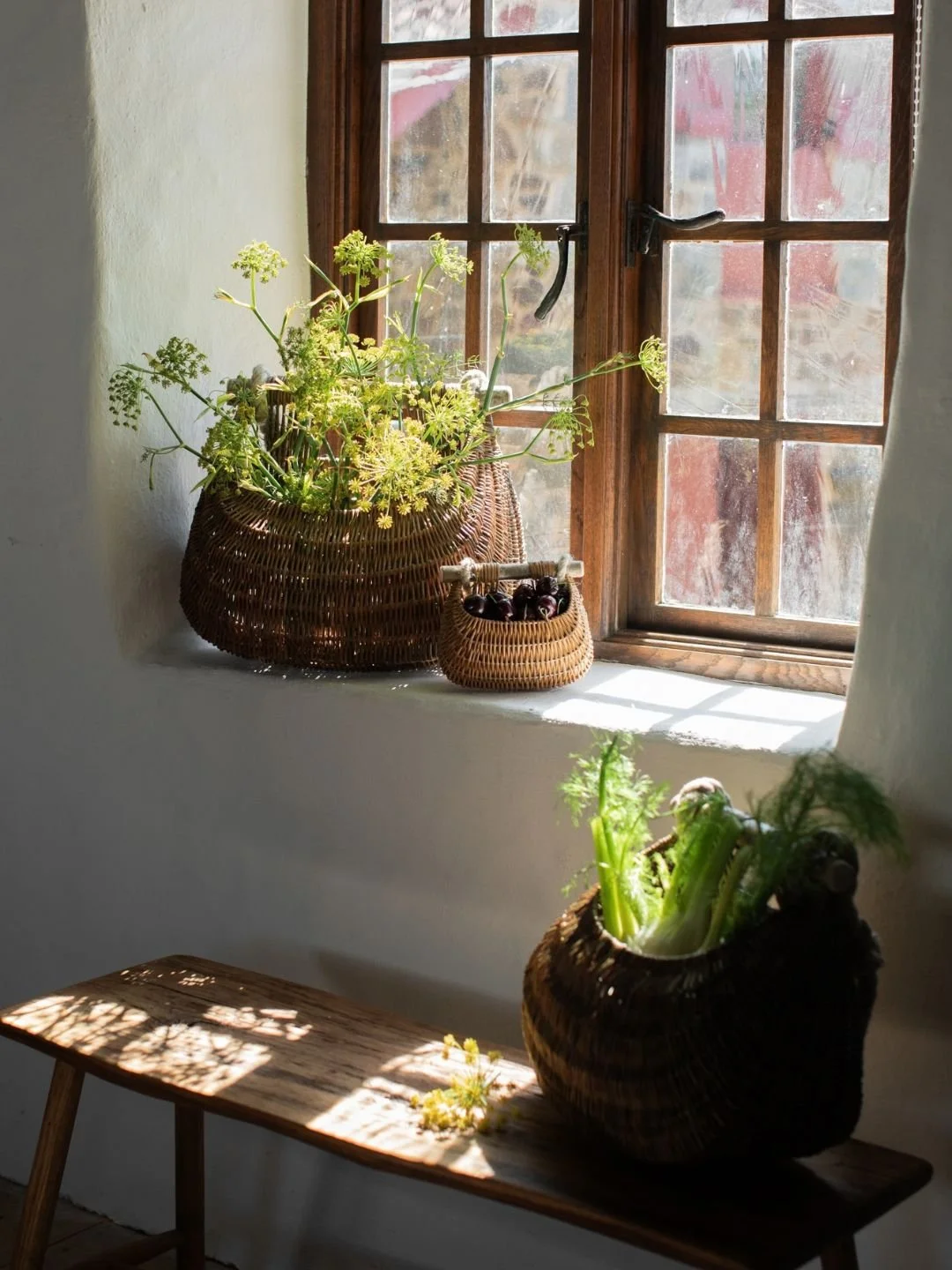
Once the baskets of fisherman, today they’re admired as a decorative and functional wares, to wear or hang on the wall at home. Ponier à cous are used for many different things today; for storing vegetables, carrying picnics, or as a sculptural, beautiful wall hanging. For some, baskets are collectible, heirloom pieces, for others they are for the everyday. Beyond the modern home, Claire Gaudion’s Guernsey fishing baskets have found their way to Michelin star restaurant, Vraic, and RHS Chelsea Flower Show gold-medal winners, Raymond Evison Clematis’ exhibits